SkySentinel Sightings: Black Harrier
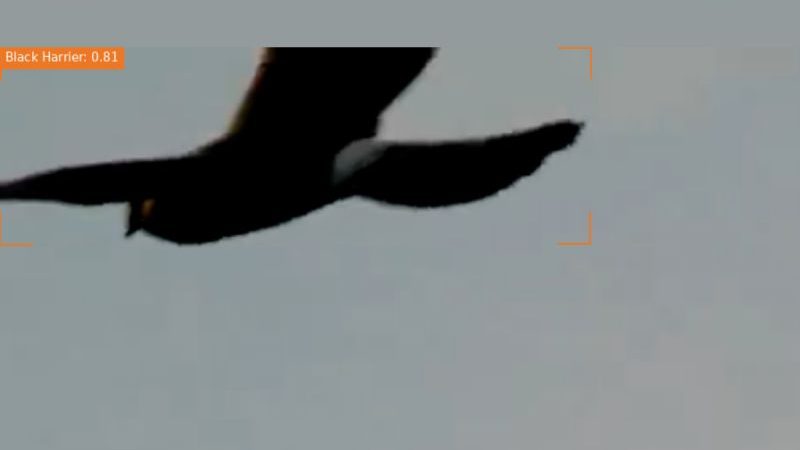
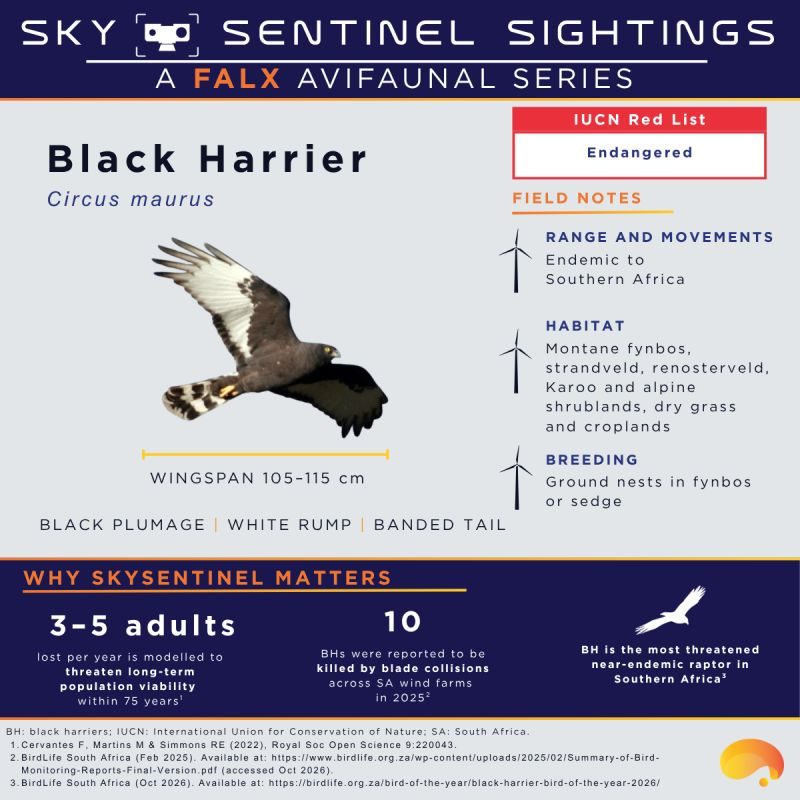
The Black Harrier (Circus maurus) is South Africa’s most range-restricted bird of prey and, fittingly, BirdLife South Africa’s Bird of the Year for 2026 [1].
Fewer than 1,300 remain, almost all in the fynbos and renosterveld of the Western Cape. Over the past century roughly 85% of its historic breeding habitat has been lost to agriculture and urban expansion [2].
It is notoriously hard to detect and track. Its low, bobbing flight as it quarters just above the vegetation for prey keeps it close to the ground and often out of easy view, yet it regularly crosses through turbine blade height, making it the sixth most at-risk South African raptor from turbine collision [3]. Population modelling has found that losing just three to five adults a year to collisions and other human causes is enough to threaten the species’ survival within 75 years [4].
References
- African BirdLife (2025). Meet South Africa’s Bird of the Year 2026.
- BirdLife International (2024). Black Harrier (Circus maurus) species factsheet.
- Simmons RE, Ralston-Paton S, Colyn R, Garcia-Heras M-S (2020). Black Harriers and Wind Energy: Guidelines for Impact Assessment, Monitoring and Mitigation. Cape Town: BirdLife South Africa.
- Cervantes F, Martins M, Simmons RE (2022). Population viability analysis of the Black Harrier, a specialist predator endemic to South Africa’s fynbos biome. Royal Society Open Science 9: 220043.
SkySentinel Sightings is our series on the species SkySentinel detects across southern African skies.
First posted on FALX’s LinkedIn page.