SkySentinel Sightings: African Sacred Ibis

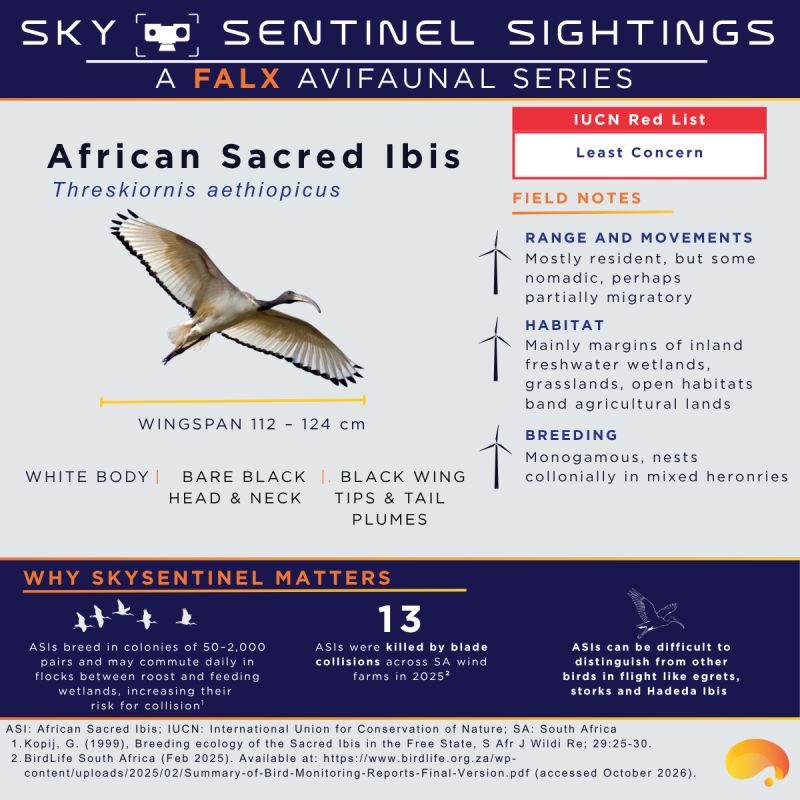
The African Sacred Ibis (Threskiornis aethiopicus) is one of southern Africa’s most familiar wetland birds, instantly recognisable by its white plumage and bare black head and neck. It did not breed in southern Africa until the early twentieth century, when small colonies first appeared on coastal islets near Cape Town. It has since spread inland as far as Zimbabwe, helped by irrigation and farmland [1].
Nesting in colonies of up to 2,000 pairs, it commutes daily between its roost and feeding wetlands, and has been recorded as an effective predator of eggs and chicks in mixed waterbird colonies elsewhere in its range [2]. The IUCN lists the species as Least Concern, though its continuing spread is bringing it into closer contact with farmland and infrastructure [1].
References
- BirdLife International (2024). African Sacred Ibis (Threskiornis aethiopicus) species factsheet. BirdLife DataZone.
- Williams AJ, Ward VL, Underhill LG (2006). Sacred Ibis and Grey Heron predation of Cape Cormorant eggs and chicks; and a review of Ciconiiform birds as seabird predators. Waterbirds 29(3): 321–327.
SkySentinel Sightings is our series on the species SkySentinel detects across southern African skies.
First posted on FALX’s LinkedIn page.